


Safe Hair Transplant Clinic: How to Choose the Right One in India
Choosing a safe hair transplant clinic is one of the most important decisions in your hair restoration journey. Most people start by comparing prices, but here’s the thing, a hair transplant is a medical procedure where the result stays with you for life.
The safety of the procedure and how natural your results look depend heavily on the doctor’s experience, planning, and execution, not just the cost you pay. Poor angulation, incorrect hairline design, or over-harvesting of grafts can lead to results that look unnatural and are very difficult to correct later.
That’s why choosing a clinic where procedures are performed entirely by qualified doctors, with proper graft planning and long-term thinking, becomes critical. Clinics that focus on natural hairline design, ethical consultation, and structured follow-up tend to deliver more consistent and safe outcomes over time.
Why Choosing a Safe Hair Transplant Clinic Matters More Than Cost
Most people compare hair transplant clinics based on price first. It’s understandable, but in this case, it can lead to the wrong decision.
A hair transplant is not just a cosmetic service. It’s a medical surgical procedure where every graft is placed manually, and the outcome depends on precision, planning, and the doctor’s expertise. Once done, the result is permanent and visible every single day; there’s no easy reset.
When a procedure is not done correctly, the issues are usually very noticeable. This can include an unnatural hairline, incorrect direction or angulation of hair, low density, or even damage to the donor area. These are not small problems; they directly affect how natural your overall appearance looks.
What many patients don’t realise is that correction is much more difficult than the first procedure. The donor area is limited, and once it is overused or poorly handled, fixing the result becomes complicated and sometimes not fully possible.
This is where the difference between cost and value becomes clear. Clinics that focus only on pricing often compromise on doctor involvement, planning time, or technique. On the other hand, clinics that prioritise safety and long-term results invest more time in designing the hairline, calculating graft distribution, and ensuring proper execution.
For example, a clinic that has performed over 24,000+ procedures across 10+ years brings a level of experience that directly impacts decision-making during surgery. When procedures are done entirely by doctors, it ensures better control over critical steps like extraction, channel creation, and implantation.
Similarly, offering a 25-year written warranty reflects confidence in long-term outcomes, something that only comes with consistent results and careful planning. Factors like free consultation and no follow-up charges also indicate a structured, patient-first approach rather than a transactional one.
What this really means is simple: you’re not just paying for grafts. You’re investing in the planning, precision, and long-term thinking behind your result.
Choosing a safe hair transplant clinic is one of the most important decisions in your hair restoration journey. Hair transplant is considered safe when performed under proper medical standards, as also outlined by organizations like the International Society of Hair Restoration Surgery.
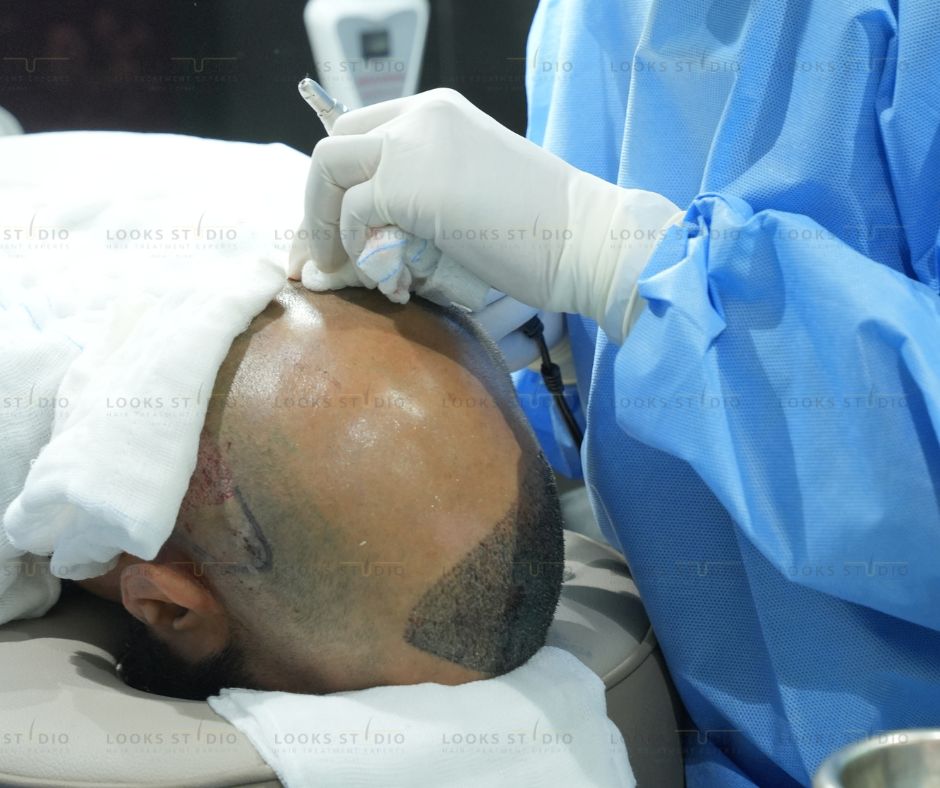
7 Key Factors to Choose a Safe Hair Transplant Clinic
1. Is the Procedure Done Entirely by Qualified Doctors?
This is the single most important factor, and honestly, the most ignored one.
In many clinics, the initial consultation is done by a doctor, but the actual procedure is handled mostly by technicians. Patients often don’t realise this difference until after the surgery.
A hair transplant involves multiple critical steps: donor extraction, channel creation, and implantation. Each of these requires medical judgment, especially when it comes to preserving the donor area and maintaining natural hair direction.
When procedures are performed entirely by doctors, there is better control over precision, angulation, and graft handling. This directly impacts how natural the final result looks.
Clinics that clearly state doctor involvement in every step tend to deliver more consistent outcomes. It’s something you should always ask directly before deciding.
2. Experience & Track Record
Experience in hair transplant is not just about years; it’s about the number of cases handled and the consistency of results.
Every patient is different. Hair type, scalp condition, degree of baldness, and donor strength all vary. A clinic that has handled thousands of cases is more likely to make better decisions during planning and surgery.
For example, clinics with 24,000+ procedures performed over 10+ years have already seen a wide range of cases, from simple hairline corrections to advanced baldness patterns. That kind of exposure helps in avoiding common mistakes and adapting techniques as needed.
What you should look for:
- Long-term results (not just immediate after photos)
- Cases similar to your hair loss pattern
- Consistency across multiple patients
Experience shows up in the details, especially in how natural the results look after 6–12 months.
3. Natural Hairline Design Expertise
Hairline design is where most bad transplants become obvious.
A natural hairline is not just about placing hair in the front. It has to match your face shape, age, and future hair loss pattern. If it’s too low, too straight, or too dense in the wrong area, it can look artificial.
Good clinics take time to design the hairline before the procedure starts. They consider:
- Facial proportions
- Existing hair pattern
- Long-term progression of hair loss
The direction and angulation of each graft also matter. Even with good density, wrong angles can make hair look unnatural.
Clinics that focus on natural hairline design usually avoid aggressive or unrealistic promises. The goal is not just density; it’s believability.
4. Transparent Graft Planning
Graft planning is where science meets judgment.
Some clinics promise very high graft numbers to attract patients. But more grafts do not always mean better results. Over-harvesting can damage the donor area, which is a limited resource.
A proper consultation should clearly explain:
- How many grafts do you actually need
- Where those grafts will be placed
- How the donor area will be preserved
Clinics that follow a transparent approach focus on balanced distribution rather than over-promising density. They plan not just for today but also for future hair loss.
This is also where long-term thinking becomes important. When planning is done carefully, results tend to age better and look more natural over time.
5. Hygiene & Medical Setup
Since this is a surgical procedure, the clinical environment matters a lot.
A proper setup should include:
- Sterile operation conditions
- Clean instruments and protocols
- Trained medical staff
- Emergency readiness
This is not something patients usually verify, but it plays a big role in safety and recovery.
Clinics that maintain medical standards treat hair transplant as a procedure, not a routine service. It reflects in how they prepare, execute, and manage post-operative care.
6. Honest Consultation (No Pressure Selling)
A good consultation should feel like guidance, not a sales pitch.
You should expect:
- Clear explanation of your condition
- Realistic expectations about results
- Discussion about limitations
In some cases, ethical clinics may even advise delaying or avoiding a transplant if it’s not suitable at that stage.
When consultation is honest, it builds trust. It also ensures that the treatment plan is based on what’s right for you, not just what can be sold.
Offering free consultation and no follow-up charges is often a sign of this approach. It shows the clinic is focused on long-term patient outcomes rather than short-term conversions.
7. Real Patient Results & Reviews
This is where theory meets reality.
Before deciding, take time to review actual patient results:
- Before and after photos with consistent lighting
- Timeline progression (3, 6, 12 months)
- Video testimonials, where possible
Reviews also give insight into patient experience, not just results, but also consultation, procedure, and follow-up.
Clinics with thousands of verified reviews and high ratings usually reflect consistent patient satisfaction. When reviews mention details like doctor involvement, graft count, and result timeline, they become even more reliable.
Red Flags That a Hair Transplant Clinic Is Not Safe
Not every clinic that offers hair transplants follows proper medical standards. Some focus more on volume and pricing rather than safety and long-term results.
If you notice any of the signs below, it’s worth taking a step back and reconsidering your decision.
Very Low Cost Compared to Market
If a clinic is offering prices that seem too good to be true, there’s usually a reason behind it.
Hair transplant requires time, skilled doctors, proper infrastructure, and careful planning. When pricing is extremely low, compromises are often made, either in doctor involvement, technique, or overall quality.
What this really means is that the focus shifts from patient outcome to quantity of procedures.
On the other hand, clinics that price based on planning, precision, and long-term results tend to maintain more consistency. You’re not just paying for grafts; you’re paying for the expertise behind each step.
“Unlimited Grafts” Claims
This is one of the most misleading promises in the industry.
The donor area (usually the back of the scalp) has a limited number of safe grafts. Extracting beyond that limit can permanently damage the donor area, making it look patchy and over-harvested.
There is no such thing as “unlimited grafts” in a medically safe procedure.
Clinics that talk about controlled and planned graft extraction, with a focus on preserving the donor for future needs, usually take a more responsible approach.
No Doctor Visibility
If you’re unable to clearly identify the doctor who will perform your procedure, that’s a serious concern.
Some clinics highlight brand names or sales teams, but do not clearly show the following:
- Who the doctor is
- Their qualifications
- Their role during the procedure
Hair transplant is not a technician-driven service. Medical judgment plays a role at every step.
Clinics that openly present their doctors, their experience, and their involvement in the procedure tend to be more transparent and accountable.
Only Edited or Filtered Results
Photos can be misleading if you don’t know what to look for.
Be cautious if:
- All results look overly polished or edited
- Lighting and angles keep changing
- There are no timeline-based progress photos
Real results show progression, especially at 3 months, 6 months, and 12 months.
Clinics that consistently share natural, unfiltered results over time are usually more confident in their work.
No Discussion About Donor Area
Most patients focus only on the front (hairline), but the donor area is equally important.
If a clinic does not:
- Examine your donor density
- Explain how many grafts can be safely extracted
- Discuss future hair loss
…it means planning is incomplete.
The donor area is a limited resource. Once overused, it cannot be reversed.
Clinics that emphasise donor preservation and long-term planning tend to deliver results that not only look good initially but also remain stable over time.
Subtle Trust Positioning
Without directly selling, this section naturally highlights what matters:
- Doctor involvement
- Ethical graft planning
- Long-term thinking
- Real, verifiable results
This aligns perfectly with:
- 24,000+ procedures experience
- Doctor-led surgeries
- Focus on planning and precision
- Long-term result approach backed by a 25-year written warranty
Questions to Ask Before Choosing a Safe Hair Transplant Clinic
Before you choose a clinic, it’s important to ask the right questions, not just about cost, but about safety, planning, and long-term results.
These questions help you understand how transparent and experienced a clinic really is. A good clinic will answer them clearly, without hesitation or pressure.
Who will perform my surgery?
This question directly tells you how the clinic operates.
You should get a clear answer about:
- Who is doing the extraction
- Who is creating the channels
- Who is placing the grafts
If the answer is vague or avoids specifics, that’s a concern.
In well-structured clinics, procedures are performed entirely by doctors, which ensures better control over precision and overall outcome. This becomes especially important in steps like hairline design and angulation.
How many grafts do I actually need?
This helps you understand whether the clinic is planning your case properly or just quoting numbers.
A genuine answer will include:
- Your current stage of hair loss
- Donor area capacity
- Future hair loss considerations
Be cautious if:
- The number sounds too high without explanation
- Or the clinic immediately agrees with whatever you suggest
Clinics with strong experience, often built over thousands of procedures, tend to explain graft planning logically instead of overpromising density.
What happens if the results are not satisfactory?
Most patients hesitate to ask this, but it’s one of the most important questions.
You’re not just checking for a “solution”; you’re checking accountability.
A transparent clinic will:
- Explain realistic expectations upfront
- Discuss possible limitations
- Clearly state their policy if results don’t meet expectations
When a clinic offers a written long-term warranty, it usually reflects confidence in their planning and execution, not just short-term results.
Is there a written warranty?
This question separates confidence from claims.
Verbal assurances are common, but a written warranty shows that the clinic is willing to stand behind its results over time.
It also indicates:
- Structured follow-up systems
- Long-term patient care approach
- Consistency in outcomes
Clinics that offer something like a 25-year written warranty are typically focused on durability of results, not just immediate appearance.
What is the recovery timeline?
This helps you plan your routine and also understand how well the clinic prepares patients.
A clear answer should include the following:
- How many days of visible healing (scabs, redness)
- When you can return to work
- When normal activities can resume
Clinics that guide you properly here usually also provide structured follow-up, which is important for smooth recovery.
Offering free follow-up support without extra charges often reflects a more patient-focused approach rather than a transactional one.
Can a hair transplant affect existing hair?
This is something many patients don’t think about, but it’s critical.
During a transplant, the procedure can sometimes affect your existing hair due to:
- Shock loss
- Improper planning
- Dense packing in weak areas
A good clinic will:
- Assess the strength of your existing hair
- Plan graft placement carefully
- Explain what to expect realistically
This again comes down to planning and experience, something that improves significantly when a clinic has handled a large number of cases over time.
Safe Hair Transplant Clinic vs Cost: What You Should Understand
This is where most confusion happens.
Patients often assume that a lower price means a better deal or that a higher price automatically means better quality. In reality, neither is true.
Cheap ≠ Safe
When pricing is unusually low, it usually means the clinic is compromising somewhere.
This could include:
- Limited or no doctor involvement
- Faster procedures with less precision
- Poor planning or overuse of grafts
Hair transplant requires time, attention, and medical expertise. If those are missing, the result may look unnatural or may not last as expected.
Expensive ≠ Best
At the same time, a high price does not guarantee better results.
Some clinics charge premium pricing based on branding or location, without necessarily improving the quality of execution.
So price alone, whether low or high, is not a reliable indicator.
What Actually Creates Value
The real value of a hair transplant comes from three things:
1. Doctor Expertise
The experience and judgment of the doctor directly affect planning, hairline design, and graft handling.
2. Planning
This includes deciding the right graft count, designing a natural hairline, and preserving the donor area for future needs.
3. Execution
Even with a good plan, the final result depends on how accurately each graft is placed; direction, angle, and density all matter.
Clinics that have handled a large number of cases, for example, 24,000+ procedures over 10+ years, usually develop stronger consistency in these three areas.
What this really means is simple:
You’re not paying for grafts alone. You’re investing in the thinking and precision behind them.
How Looks Studio Approaches Patient Safety
Instead of making claims, this section should quietly show how things are done.
At Looks Studio, the focus is on maintaining medical standards and long-term results through a structured approach.
- Procedures are performed entirely by doctors, ensuring control over every critical step
- The hairline design is planned to look natural and age-appropriate, not artificially dense or aggressive
- Graft planning is explained clearly, with attention to donor area safety and future hair loss
- A long-term approach is followed, where preserving the donor area is as important as creating density
- Patients are supported with structured follow-up guidance, without additional follow-up charges
With experience of over 24,000+ procedures across 10+ years, the emphasis has remained on consistency rather than shortcuts.
The 25-year written warranty reflects a focus on durability of results, not just immediate outcomes.
Final Thoughts
Choosing a hair transplant clinic is not a quick decision, and it shouldn’t be treated like one.
Take your time to understand your condition, ask the right questions, and evaluate how the clinic approaches your case.
A detailed consultation often tells you more than pricing ever will.
In the end, it’s better to choose a clinic that focuses on expertise, planning, and long-term results rather than quick fixes or shortcuts.
FAQs
Is a hair transplant safe?
Yes, qualified doctors can perform a hair transplant safely in a proper medical setup. Safety depends on hygiene, planning, and correct technique. Most complications arise when clinics perform procedures without proper medical supervision.
How do I verify doctor involvement?
You can ask directly who will perform the extraction, channel creation, and implantation. A transparent clinic will clearly explain the doctor’s role in each step. You can also check doctor profiles and patient reviews for confirmation.
Can a hair transplant go wrong?
Yes, if not done correctly. Poor planning or execution can lead to unnatural hairlines, wrong direction of hair growth, or damage to the donor area. That’s why choosing an experienced, doctor-led clinic is important.
What is the success rate of hair transplants?
Hair transplant generally has a high success rate when done properly. Most transplanted grafts grow successfully if handled and implanted correctly. Results also depend on patient factors like scalp condition and aftercare.
How long do hair transplant results last?
Transplanted hair is typically permanent because doctors take it from a stable donor area. However, existing hair may continue to thin over time, which is why long-term planning is important.
Is there a warranty on hair transplant results?
Some clinics provide a written warranty, which reflects their confidence in long-term outcomes. Make sure you understand what the warranty covers and how doctors evaluate results over time.
How many clinics should I consult before deciding?
It’s advisable to consult at least 2–3 clinics to compare approaches, not just pricing. This helps you understand differences in planning, doctor involvement, and overall transparency.
If you’re considering a hair transplant and want to understand what’s suitable for your condition, you can book a consultation to get a clear, doctor-guided assessment.